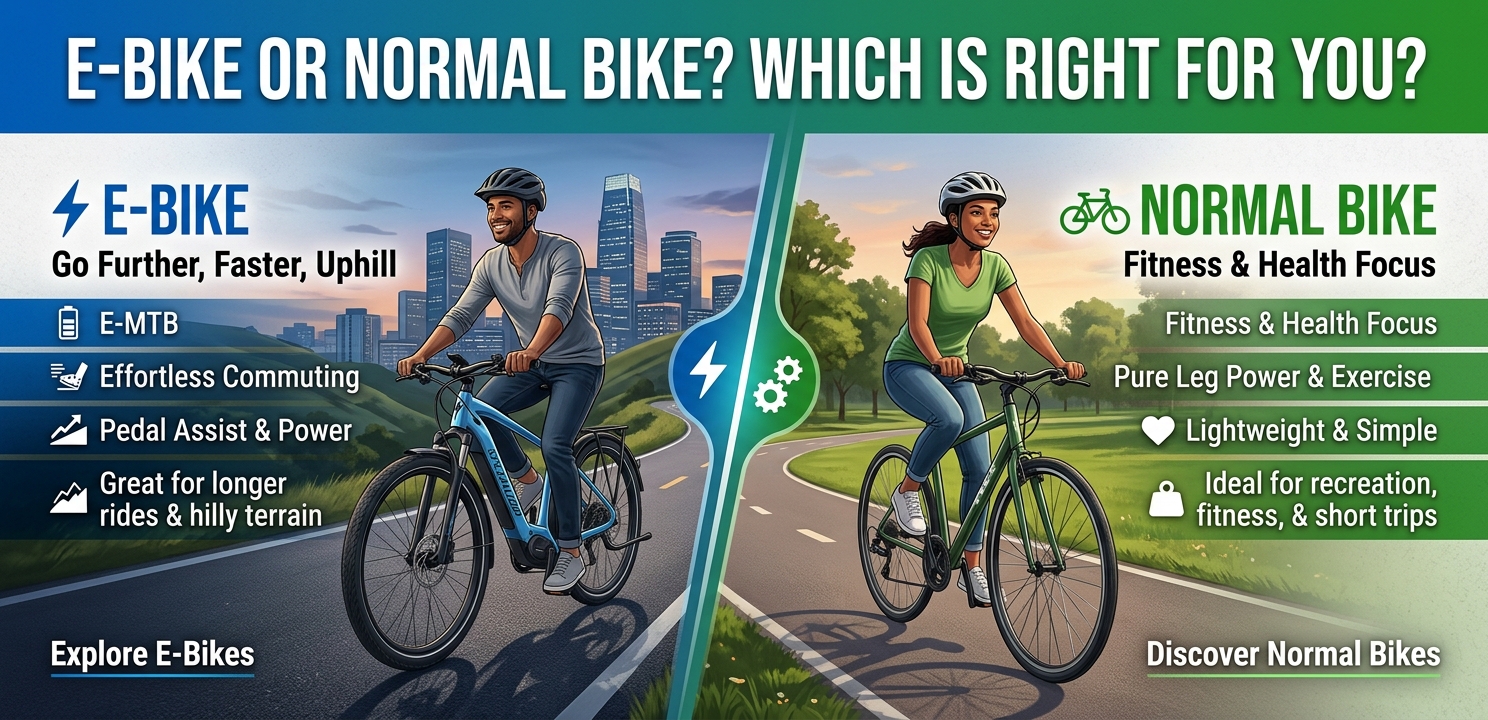
E-Bike vs. Regular Bike: Which One Is Right for You?
Choosing a bicycle often comes down to one important question: should you buy an electric bike or stick with a traditional bicycle? Both options offer unique advantages, and the right choice depends on your budget, fitness level, daily routine, and the type of riding you enjoy.
In this guide, we will compare e-bikes and regular bikes to help you make an informed decision.
What Is an E-Bike?
An e-bike, or electric bicycle, uses an electric motor to assist your pedaling. On pedal-assist models, the motor provides extra power when you pedal, making hills, longer journeys, and headwinds easier to manage.
E-bikes can be especially useful for commuting, exploring longer routes, and arriving at your destination with less physical effort. However, you should also consider the purchase price, battery charging, and potential maintenance costs.
What Is a Regular Bike?
A regular bicycle relies entirely on your own pedaling power. It does not require a motor, battery, or electrical charging, which generally makes its design simpler.
Traditional bikes are excellent for short commutes, fitness, recreational rides, and exploring nature. They are often more affordable to buy and maintain than electric models.
Five Key Differences Between E-Bikes and Regular Bikes
1. Riding Comfort
An e-bike can make climbing hills and covering long distances more comfortable. If you commute to work, ride through hilly areas, or want to reduce fatigue on longer trips, electric assistance can be a major advantage.
A regular bike requires more effort from the rider, especially on steep climbs. For people who enjoy an active riding experience, that can be part of the appeal.
2. Price and Budget
Regular bikes are generally less expensive to purchase. E-bikes cost more because they include additional components such as an electric motor, battery, and control system.
Battery replacement may also become a significant expense over time. Both types of bicycles require routine maintenance, including checking the brakes, tires, and chain.
3. Fitness and Physical Activity
Traditional cycling can require more physical effort, making it an excellent option for riders who want to challenge themselves and incorporate exercise into their routine.
However, riding an e-bike still involves physical activity. Many models allow you to adjust the level of assistance, so you can choose how much effort you want to put into each ride.
4. Range and Longer Journeys
An e-bike can make longer journeys more manageable, depending on its battery capacity and riding conditions. Actual range varies with factors such as terrain, rider weight, temperature, assistance level, and battery condition.
A regular bike does not depend on battery charge or motor range. Your journey is limited mainly by your fitness, available time, and route.
5. Weight and Maintenance
E-bikes are usually heavier because of their motors and batteries. This can make them more difficult to carry upstairs, lift onto a vehicle, or store in a small space.
Regular bikes are often lighter and mechanically simpler. E-bikes may require additional servicing for their electrical components, so access to a qualified repair shop can be important.
Which Bike Is Best for Your Lifestyle?
An e-bike may be the better choice if you:
Commute to work or school by bicycle.
Regularly ride on hilly roads.
Want to cover longer distances with less effort.
Plan to use your bicycle as a practical everyday transport option.
Are comfortable paying more for additional convenience.
A regular bike may be the better choice if you:
Want to keep your initial costs low.
Enjoy cycling as a form of exercise.
Prefer a lighter bicycle with a simpler design.
Mostly travel short distances around town.
Want to avoid battery charging and electrical maintenance.
So, Which One Should You Choose?
There is no single answer that works for everyone. If you need a bicycle for daily commuting, steep hills, or longer rides, an e-bike may be the more practical option. If your priorities are affordability, fitness, and a lightweight design, a traditional bike may suit you better.
Before making your decision, think about your daily distance, the terrain you ride on, your storage space, and your long-term maintenance budget. If possible, test both types to compare their comfort and handling.
The bottom line: The best bicycle is not necessarily the most expensive or powerful one. It is the one that fits your lifestyle, meets your needs, and works within your budget.
Take a moment to consider your riding habits, then choose the bike that will make your next ride more enjoyable.