How Much Air Pressure Should a Bicycle Tire Have? How to Find the Right Pressure
How Much Air Pressure Should a Bicycle Tire Have?
The correct tire pressure is not the same for every bicycle. Incorrect pressure can affect riding comfort, grip and overall tire performance.
So, how do you find the right pressure?
1. Tire width matters
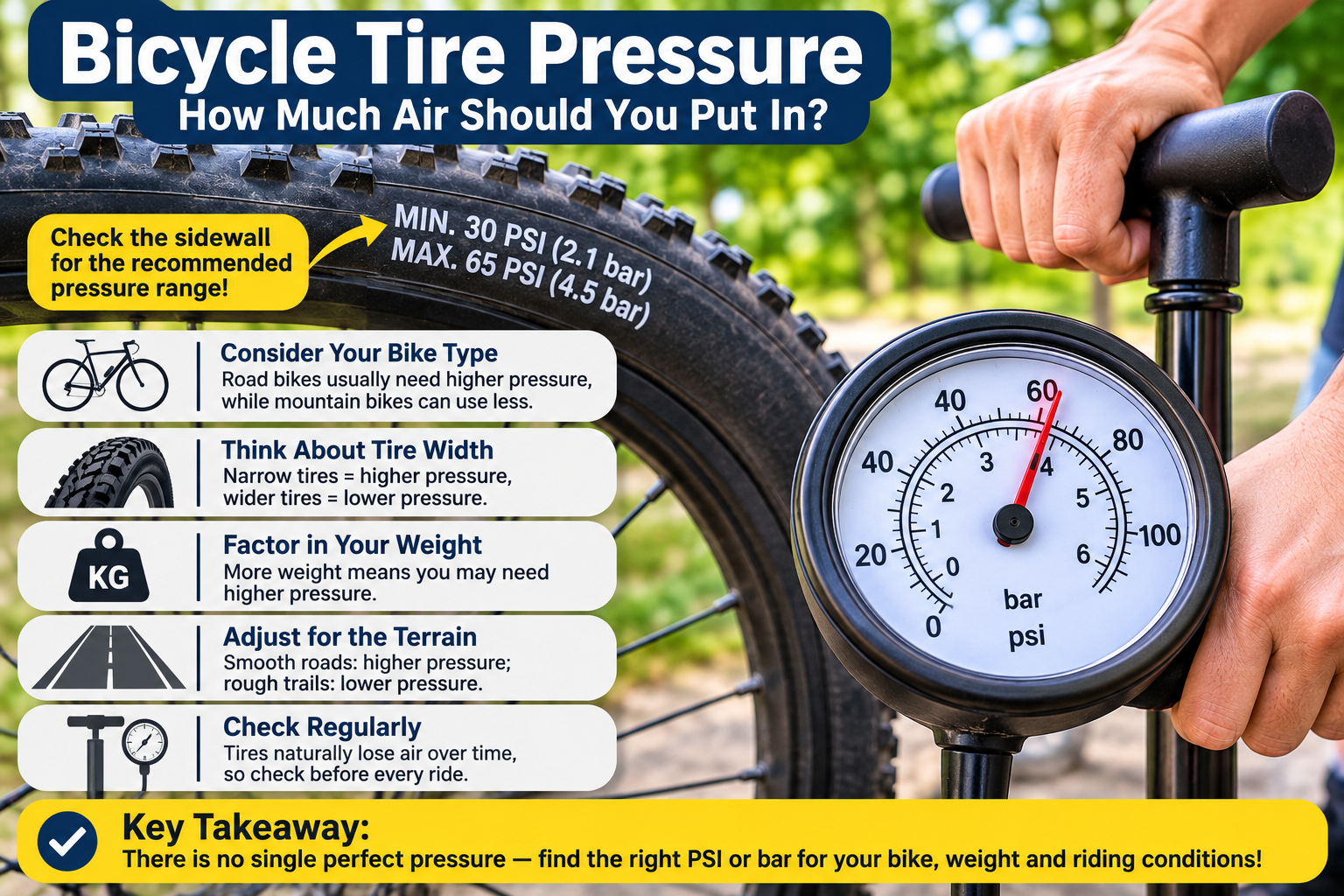
In general, narrower tires are used at higher pressures, while wider tires require lower pressures. For example, the thin tires on road bikes do not need the same pressure as the wider tires on mountain bikes.
2. Consider the rider's weight
The more weight a bicycle carries, the more support its tires need. Your body weight and any additional load, such as bags, should therefore be considered when choosing tire pressure.
3. Adjust for road conditions
Smooth asphalt: Higher pressure may be suitable on smoother surfaces.
Rough roads: Slightly lower pressure can improve comfort and grip.
Off-road trails: Lower pressure may be needed depending on tire width and terrain.
However, reducing tire pressure too much can increase the risk of damaging the rim or tire when hitting obstacles.
4. Check the markings on your tires
The sidewall of your tire shows the manufacturer's recommended minimum and maximum pressure. Do not exceed these limits. You should also consider the recommendations of your tire and rim manufacturers.
5. Check your tire pressure regularly
Bicycle tires naturally lose air over time. Make it a habit to check your pressure, especially before longer rides. Using a pump with a pressure gauge is more reliable than estimating by feel.
Conclusion
The correct bicycle tire pressure is not just about speed. It also affects comfort, safety and grip. Consider your tire width, rider weight and riding surface when choosing the right pressure.
Remember: There is no single tire pressure that works for every bicycle.