What Do Professional Cyclists Eat During Races? 120 Grams of Carbs per Hour!
Have you ever wondered how professional cyclists fuel themselves during races that last for hours?
During a Grand Tour stage, cyclists may spend 4–6 hours on the bike. Maintaining a high level of effort for that long requires a considerable amount of energy. That's why professional teams carefully plan not only their training but also what riders eat and drink throughout each race.
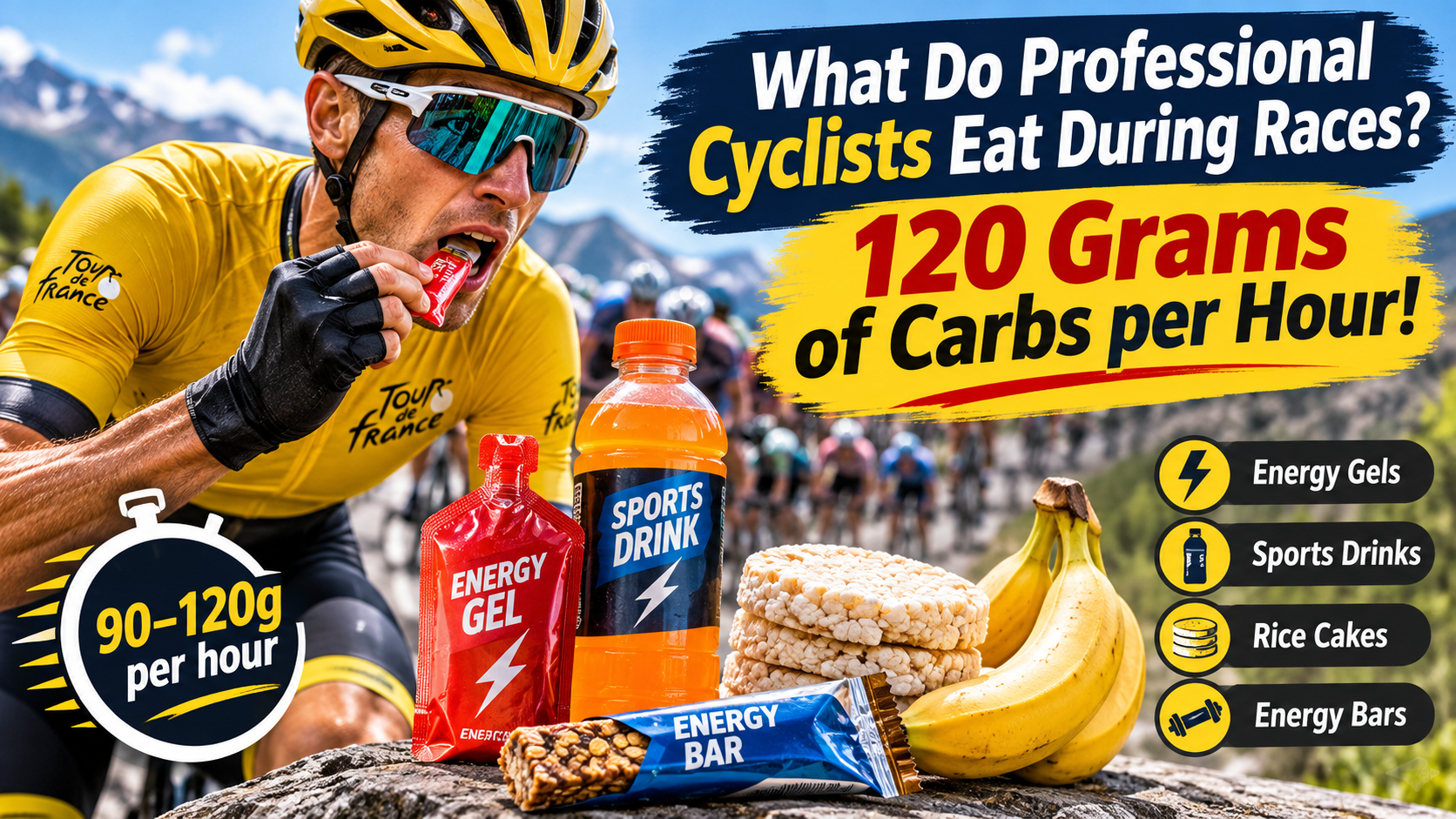
Today, some professional cyclists can consume up to 120 grams of carbohydrates per hour during competition.
1. How is it possible to consume 90–120 grams of carbohydrates per hour?
Cycling nutrition has changed significantly in recent years. While consuming 30–60 grams of carbohydrates per hour was once more common, elite riders now aim for higher amounts.
During long and demanding races, consuming around 90 grams per hour has become increasingly common among professionals. Some riders can reach 120 grams per hour after training their digestive systems to tolerate it.
Carbohydrates are an important energy source for working muscles. The longer and harder a cyclist rides, the greater the body's energy requirements become.
However, 120 grams per hour is not suitable for everyone. The digestive system needs to be gradually trained to handle such amounts.
2. What do professional cyclists eat during races?
Race nutrition needs to provide energy while being easy to carry and consume on the bike.
Some of the most common options include:
Energy gels
Energy gels contain concentrated carbohydrates in small, convenient packets. They are easy to carry and consume, making them particularly useful during intense sections of a race.
Sports drinks
Specially formulated sports drinks provide fluids and carbohydrates. Some products also contain electrolytes to help replace minerals lost through sweating.
Rice cakes
Rice cakes are a familiar part of professional cycling nutrition. Usually made with rice and other ingredients, they offer a practical alternative for riders who want to eat solid food.
Energy bars and other snacks
Energy bars, bananas and other easy-to-eat foods may also be included, depending on the length of the race and the rider's preferences.
3. How do cyclists reach 120 grams of carbohydrates in one hour?
They don't need to get all their carbohydrates from a single product. Professional riders combine different sources.
For example, an hourly nutrition plan might include an energy gel, a carbohydrate-rich sports drink and a solid snack.
The total amount depends on the carbohydrate content of each product.
Combining different types of carbohydrates, such as glucose and fructose, can also help the body absorb larger amounts during exercise.
4. What do professional cyclists eat before and after a race?
Nutrition is not limited to the time spent racing.
Before the race: Riders eat carbohydrate-rich meals based on the expected duration and intensity of the stage. Breakfast and the pre-race meal help support their energy stores.
During the race: Gels, sports drinks, rice cakes and other easy-to-consume foods help maintain energy levels.
After the race: Meals containing carbohydrates and protein help replenish energy stores and support recovery. Replacing lost fluids is also important.
5. Should amateur cyclists also consume 120 grams of carbohydrates per hour?
No. It is not a good idea to copy professional cyclists' nutrition plans without considering your own needs.
Carbohydrate requirements depend on the duration and intensity of the ride, training level and digestive tolerance.
General sports nutrition guidelines include:
For exercise lasting 1–2.5 hours, 30–60 grams of carbohydrates per hour may be appropriate.
For longer exercise lasting more than 2.5 hours, intake can reach up to 90 grams per hour.
Higher amounts, particularly 120 grams per hour, should only be considered by athletes who have trained their digestive systems and can tolerate them.
Increasing carbohydrate intake too quickly can cause stomach and intestinal discomfort. It is better to test your nutrition strategy gradually during training rides.
Conclusion
Professional cyclists' performance is not built on powerful legs and intense training alone. Getting the right amount of energy at the right time is also an important part of racing.
Energy gels, sports drinks, rice cakes and carefully planned nutrition help professional riders maintain a high pace for hours.
Think about your own nutrition before your next long ride. In cycling, managing your energy can be just as important as your physical strength.