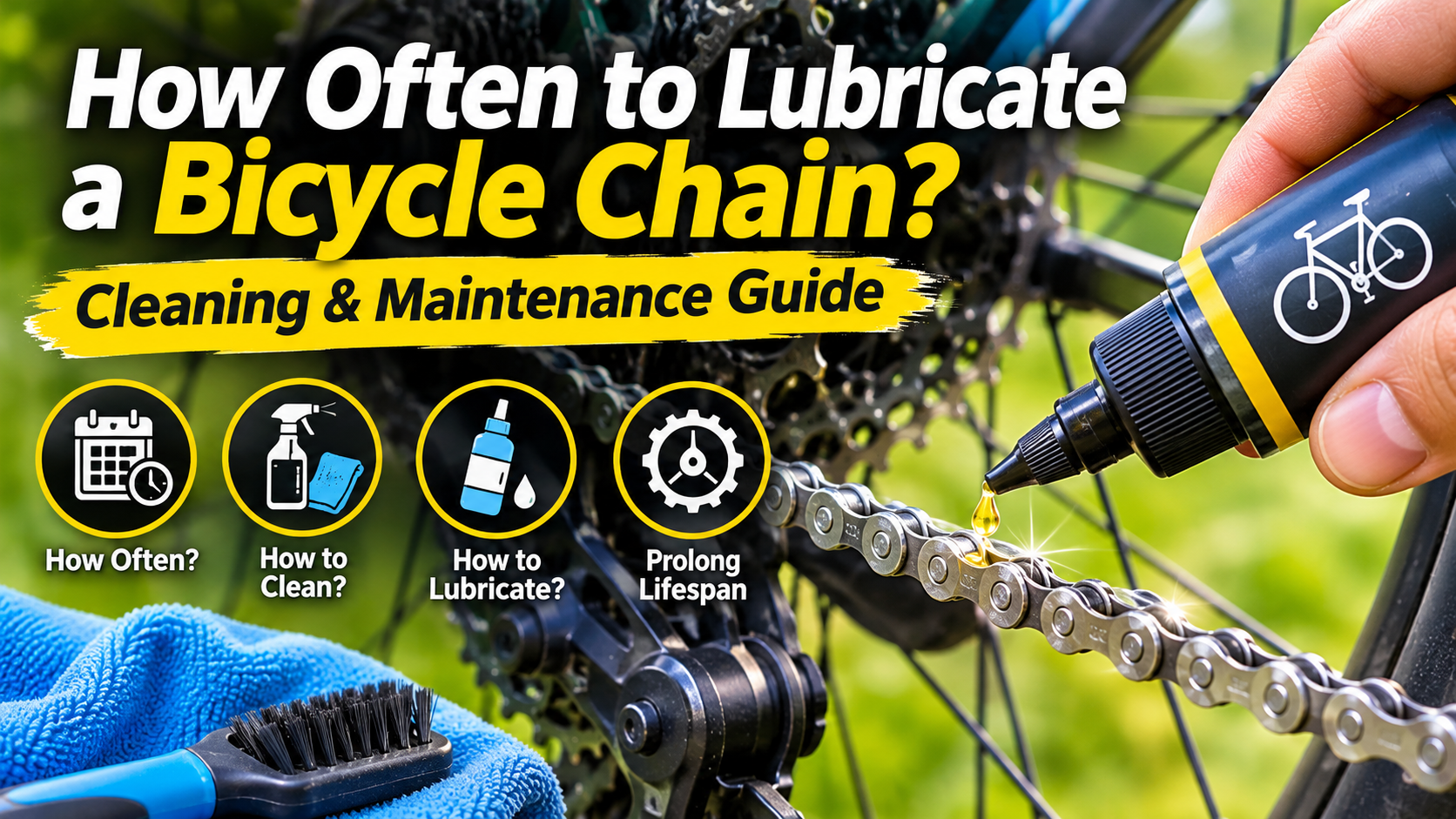
How Often Should You Lubricate Your Bicycle Chain? A Guide to Proper Chain Maintenance
The bicycle chain is one of the most important components of a bike. It transfers power from the pedals to the rear wheel, allowing the bicycle to move. However, because it is constantly moving and exposed to external conditions, a chain can wear out, become noisy and affect shifting performance if it is not maintained properly.
So, how often should you lubricate your bicycle chain? How should you clean it? Here is what you need to know to help extend the life of your chain.
How often should you lubricate a bicycle chain?
There is no single maintenance schedule that works for every cyclist. The frequency depends on how often you ride, weather conditions, road surfaces and the type of chain lubricant you use.
You should check your chain after:
Riding in rainy or wet conditions
Cycling on dusty or muddy roads
Hearing unusual noise coming from the chain
Noticing that the chain looks dry or dull
Completing long rides
The key is not simply to lubricate the chain at fixed intervals, but to inspect its condition regularly.
How do you clean a bicycle chain?
Before applying fresh lubricant, it is important to remove dirt and old lubricant residue. Applying new oil directly to a dirty chain can cause more grime to build up.
Follow these steps:
Secure your bicycle in a stable position.
Remove loose dirt using a cloth or a suitable chain-cleaning brush.
Use a bicycle-chain cleaner to remove accumulated grease and dirt.
Wipe the chain with a clean, dry cloth.
Allow the chain to dry completely before lubricating it.
Avoid using harsh chemicals that could damage your bike's paintwork or other components.
How do you lubricate a bicycle chain?
Once the chain is clean and dry, you can apply lubricant.
Choose a chain lubricant suitable for your riding conditions.
Apply a small drop to each chain link's moving section.
Slowly turn the pedals backwards to distribute the lubricant along the chain.
Wait a few minutes, then wipe away excess lubricant with a clean cloth.
One important detail: more lubricant does not mean better lubrication. Leaving too much oil on the outside of the chain can attract dust and dirt.
Should you use different chain lubricants for dry and wet weather?
Not all chain lubricants are designed for the same conditions.
Dry-weather chain lubricants: These are designed for dry and dusty conditions and are generally formulated to attract less dirt. However, they may wear off more quickly in rainy weather.
Wet-weather chain lubricants: These are designed to stay on the chain for longer in wet and humid conditions. However, applying too much can lead to increased dirt buildup.
Choosing the right lubricant depends on the conditions in which you usually ride.
What happens if you neglect chain maintenance?
Neglecting chain maintenance can cause more than just a noisy ride. Over time, it can also affect other parts of your bicycle's drivetrain.
The chain and sprockets may wear out faster.
Gear changes may become rough or inconsistent.
Friction and noise while pedalling may increase.
A worn chain can accelerate wear on the cassette and chainrings.
That is why chain maintenance should be a regular part of your cycling routine.
How can you tell when a bicycle chain needs replacing?
A chain does not simply stretch. Instead, wear at the pin and link connections causes its measured length to increase over time. If this wear becomes excessive, it can also damage the cassette and chainrings.
The most reliable way to check chain wear is with a chain-wear measuring tool. Rather than waiting until you have covered a certain number of kilometres, inspect the chain regularly.
Conclusion: A clean chain makes for a better ride
Bicycle chain maintenance does not have to be complicated or time-consuming. Regular cleaning, choosing the right lubricant and applying it when necessary can help extend chain life, maintain shifting performance and improve riding comfort.
Remember: good bicycle maintenance is not just about checking major components. It also means taking care of small but essential parts, such as the chain.